

Dear Invisible Friends,
1. School’s in session…brace yourself!
Back-to-school vibes, the daily routine taking over, the colors starting to shift to fall/autumn tones; I still haven’t had my first Pumpkin Spice Latte of the year. Anyways, let’s talk learning.

As I wrote in the About Page of my personal blog, I opened this blog to document my learning journey. I am doing this with you guys, my invisible friends. Sure, it occasionally became a wildly distracting new hobby. It managed to steal time away from actual learning. Bad Dina, right? Maybe I should earn a degree in procrastination!
Slowly but surely (“Don’t call me Shirley,” like the scene in Airplane), I’m learning Python.
No more dilly dallying, let’s go to the topic.
2. What is Python and why is it useful?
Python is a high-level, interpreted programming language. This means you can talk to your computer without sounding like a robot. You give it broad instructions, and Python handles the tiny details like a helpful assistant who doesn’t need micromanaging.

Here’s why Python is beginner-friendly:
- It has built-in data structures and flexible typing (translation: less stress over rigid rules).
- The syntax is so clean it’s practically spa-level relaxing.
- You can reuse code with modules and packages, which feels like copy-pasting your way to genius.
And productivity? Python is like skipping the line at the coffee shop. No compilation step means faster testing and debugging. If something breaks, Python stays calm. It raises an exception and shows you a helpful stack trace. Even the debugger is written in Python. That’s some serious introspection.
Python is everywhere: web development, data science, AI, automation – even Excel gets a glow-up. It’s the multitasker of programming languages.
I’m not here to sell you Python. I’m not looking to become a tech influencer. Though, if Python had merch, I’d probably buy the mug.
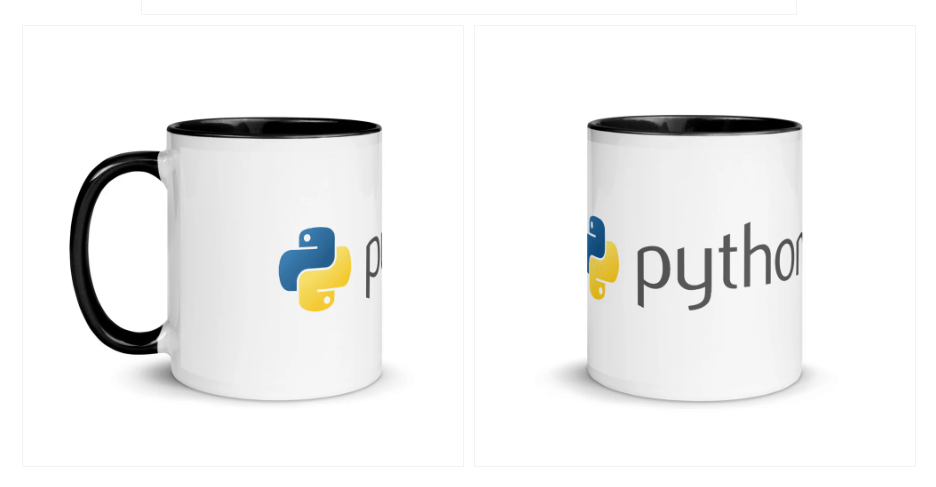
I’m just starting out. I’ve found that Python is like that one friend who can DJ. It can bake cookies, fix your Wi-Fi, and organize your closet. It’s versatile, supportive, and always ready to help – just like this blog.
3. Why I wanted to learn Python
The answer is very simple; it was a mandatory section of this training in Udemy: The AI Engineer Course 2025: Complete AI Engineer Bootcamp.
But then, in these times of “Vibe Coding”, I still want to learn programming by myself. I had a bad experience with “Vibe Coding” in HTML. The failure was not epic enough to grant a blog post. It was not enough to make it slightly entertaining.
On the other hand, you can still check these previous posts about Vibe Coding epic fails:
On a personal note, I still want to learn Python programming. I want to practice “how to think” and apply it to problem-solving issues in my daily life and work.
4. My online learning journey
My experience on Udemy is mostly positive. I was used to following other courses based on video classes, assignments, and quizzes. This is the first time that I have to write code on the Udemy interface. I can run the code and then submit the task to check if it is correct or incorrect. At the beginning, I thought it was a little bit buggy, but in the end, it’s working fine. My AI colleagues at work told me that a similar interface is used in Dutch universities.
Instead of just watching the videos and filling out the Python, I’ve taken a delightful trip back to the Stone Age with my trusty old-school notebook (yes, I even jot down code in it!). Sure, it’s like trying to win a race on a turtle, but who knows? Maybe one day my brain will throw a party and invite all this information to dance!

After completing this course, I have planned to follow a course on Ethical Hacking with Python. I also plan to take The Complete Python Pro Bootcamp.
5. Current Progress and Reflections
To be honest, I’m just a beginner. But I can show you my progress (on my current course) so you can motivate me. For the sake of brevity, I won’t include the topics of the Udemy courses I haven’t started yet.
✅ Completed Sections
- Section 10: Python Module: Why Python?
- Section 11: Python Module: Setting Up the Environment
- Section 12: Python Module: Python Variables and Data Types
- Section 13: Python Module: Basic Python Syntax
- Section 14: Python Module: More on Operators
- Section 15: Python Module: Conditional Statements
🚧 In Progress / To Do
- Section 16: Python Module: Functions
- Section 17: Python Module: Sequences
- Section 18: Python Module: Iteration
- Section 19: Python Module: A Few Important Python Concepts and Terms
6. Chit-Chat: Let’s learn and laugh together!
If you’ve managed to read this far, you’ve definitely earned a complimentary cup of your favorite drink. It’s on the house! (which, I suppose, is your house, so maybe it’s just a friendly loan). Thanks for sticking with me through this blogospheric adventure!
So, do you know how to program in Python, how was your experience? Let me know in the comments below.
RoxenOut!

Leave a comment