Dear Invisible Friends,
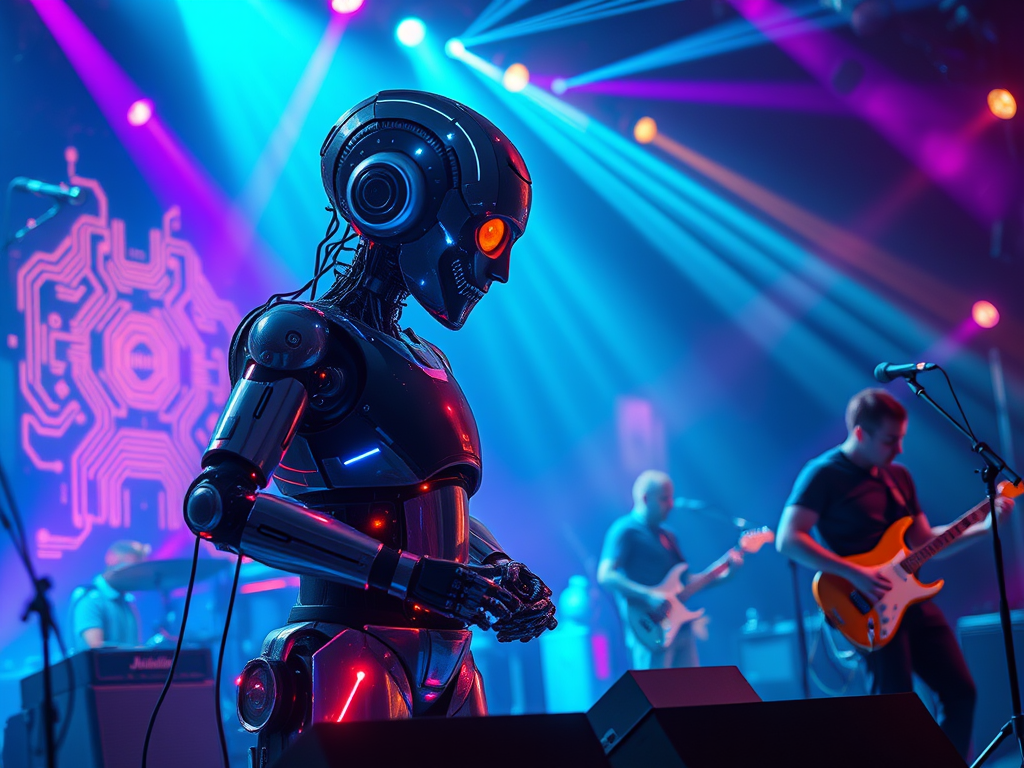
Everyone’s in a heated debate over The Velvet Sundown-that ‘band’ where the only authentic aspect is the existential dread echoing in the ears of its listeners. Let’s bypass the Spotify embeds (no doubt you’ve already hunted them down with Shazam) and tackle the big question: When an AI ‘band’ releases a track that makes your favorite artist’s last attempt sound like a cat in a blender, do you pretend it didn’t happen or just discreetly refresh your playlist like a guilty little music ninja?
There are thousands of resources out there about the Velvet Sundown, so I won’t go into details. What we know now is that everything is AI-generated. This includes their lyrics, their music, even their pictures. Even their Spotify page is AI-generated. That made me think that “AI may be coming for music”.
Let’s get one thing straight: AI isn’t “coming for music.” It’s already here, drunk at the afterparty, hogging the aux cord with a playlist of algorithmically generated bops. But while tools like Empress and AIVA help artists churn out tracks faster than a SoundCloud rapper on Adderall, the legal and ethical mess they’ve created is anything but harmonious.
From Mozart to Machine Learning: A Brief(ly Chaotic) History
AI’s music career started about as gracefully as your uncle’s karaoke rendition of “Bohemian Rhapsody”:
- 1950s-1980s: Clunky computer “compositions” that sounded like a dial-up modem having a seizure.
- 2000s-Today: AI went from writing MIDI elevator music to full-blown symphonies and hyperpop bangers (thanks, OpenAI’s MuseNet).
The Twist: AI doesn’t “create” music. It’s the ultimate remix artist-mashing up every chord progression it’s ever heard into something just original enough to dodge a lawsuit. Which brings us to…
The only thing AI can’t fake? The 27 Club

Copyright Law vs. AI: The Messy Divorce
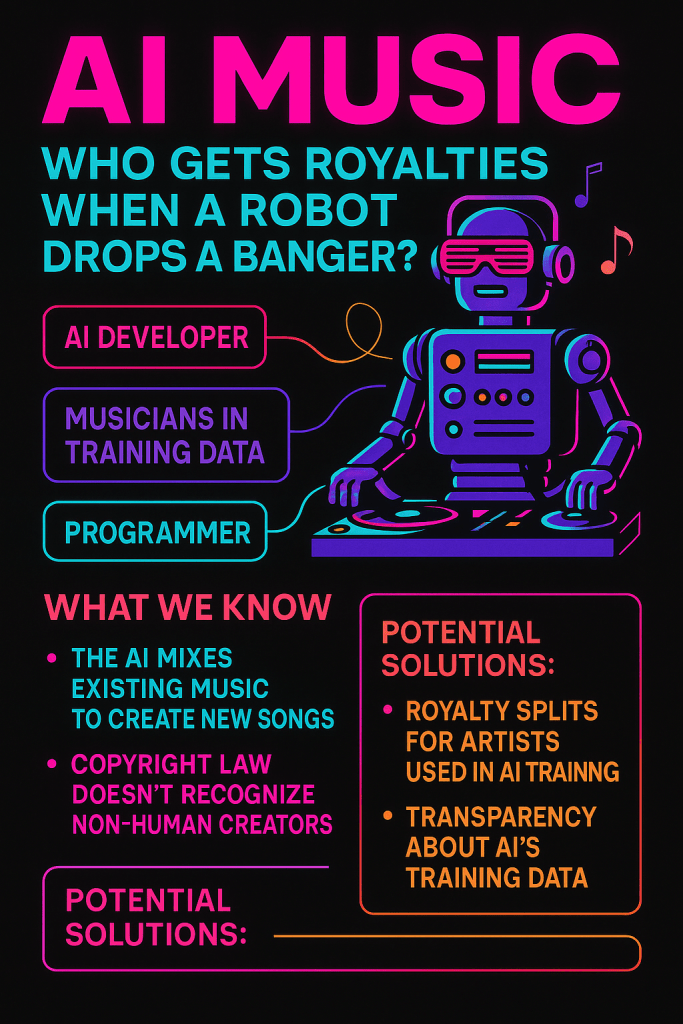
Problem 1: Who’s the “Artist”?
Imagine a courtroom drama (“Your Honor, my client didn’t steal that chord-it evolved”).
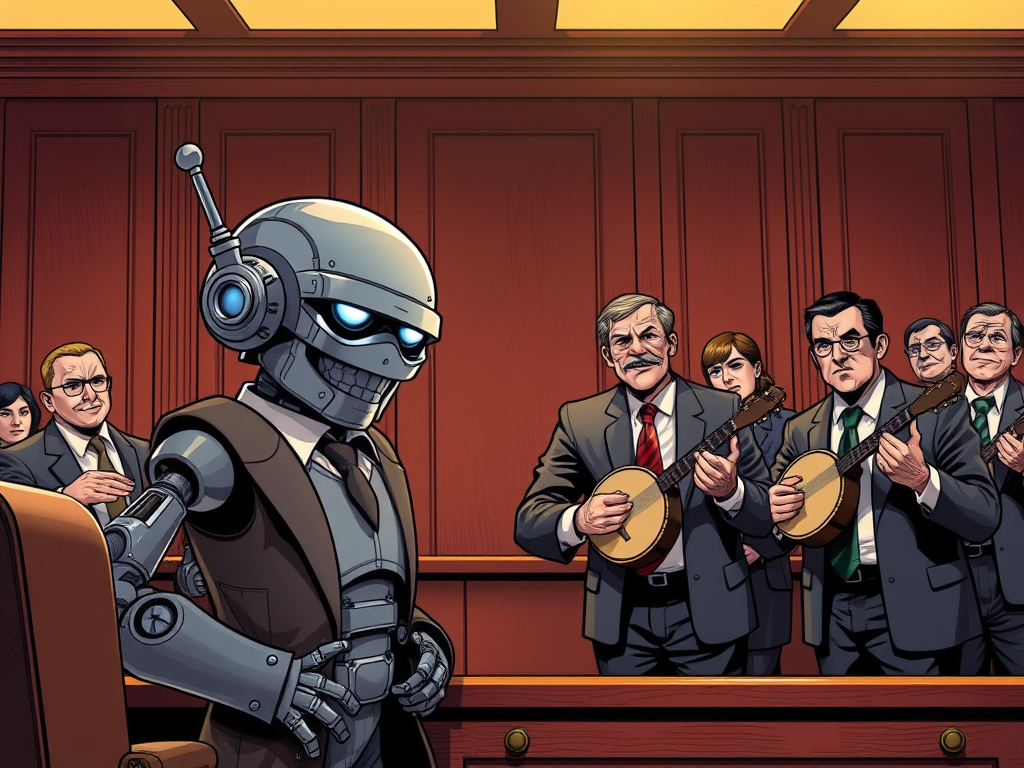
- U.S. Law: “LOL no,” says the Copyright Office, slamming the door on non-human creators.
- EU Law: “Maybe… if you squint?” [Proceeds to draft 200-page loophole.]
Real-World Drama: When an AI pumps out a track that suspiciously sounds like Taylor Swift singing over a Beethoven beat, who gets sued? The programmer? The dataset? The algorithm itself? (Spoiler: Nobody knows.)
Problem 2: Is It Plagiarism or “Inspiration”?
AI doesn’t steal music-it “learns” like a college student cramming Wikipedia the night before finals. But when an AI-generated K-pop hit rips off 0.003% of a BTS song buried in its training data, is that theft… or art?
Hot Take: If sampling a 2-second drum break can trigger lawsuits, AI’s entire business model is a lawsuit grenade with the pin pulled.
Ethical Trainwrecks (and why Musicians are panicking)
- The “Soulless Banger” Paradox: AI can mimic Nirvana’s grunge or Beyoncé’s vocals-but it’ll never mean it. Listeners crave authenticity, not a Spotify playlist generated by ChatGPT’s edgy cousin.
- Job Apocalypse?: Sure, AI can score your indie game for $5… but should it? Cue musicians side-eyeing their rent bills.
- Cultural Cringe: An AI “reggaeton” track made by a team in Norway might sound right, but it’ll hit like a tourist yelling “¡Dale!” at a Miami McDonald’s.
Silver Lining: Tools like Soundbrenner (AI live-mixing) and Piano2Notes (auto-sheet music) are actually useful—as long as they don’t put composers on the unemployment line.
How to Fix This Dumpster Fire (Maybe)
- Give Credit Where It’s Due:
- Transparency: Force AI tools to reveal their training data. (“This sick beat brought to you by 10,000 hours of Metallica and Baby Shark.”)
- Royalty Splits: Pay artists whose work trained the AI. (Imagine Drake getting a cut every time someone prompts “make a Drake-type beat.”)
- Human-Only Copyrights: AI-assisted music gets a ⚠️ label: “40% robot, handle with care.”
- Ethical Guardrails: Ban AI from cloning living artists’ voices (looking at you, “AI Weeknd” TikTok accounts).
The Bottom Line
AI music is the culinary equivalent of a 3D-printed Michelin star. AI music will only thrive because humans are lazy. We want the algorithm to feed us bangers while we doomscroll.
AI won’t replace musicians-but it will force us to answer awful questions like:
- Can a robot win a Grammy?
- Is an AI “inspired” by John Coltrane just jazz plagiarism?
- Will future teens rebel by listening to 100% human-made music?
- The real question isn’t ‘Can AI make music?’-t’s ‘Will you care when it’s better?
One thing’s clear: The music industry’s about to have its Napster moment all over again. Buckle up.
What Do You Think?
Has AI gone too far, or is this just the next step in musical evolution? Did you listen and liked – AI-generated music?
Let’s make this a conversation: Drop your thoughts, opinions, or burning questions in the comments below. I’d love to see where you stand on the future of AI and music!
Note: I have used some AI friends to help me write this blog post. These include Sider AI Deep Research, DeepThink (R1), and ChatGPT-4o. In the end, all opinions are mine.
In addition, a non-AI agent helped me with feedback and discussion about this topic. The non-AI agent is my human husband (not that I’m having a cybernetic one on the side). Shout-out to his non-AI music band, please check them out on Spotify.
What do you think? Is there any hope for the music industry or using AI in music is like kicking a dead horse?
Let me know in the comments below!
RoxenOut!
References
- Chen, Y., Huang, L., & Gou, T. (2024). Applications and Advances of Artificial Intelligence in Music Generation: A Review. arXiv:2409.03715 [cs.SD]. https://arxiv.org/abs/2409.03715
- Herremans, D., Chuan, C. H., & Chew, E. (2017). A functional taxonomy of music generation systems. ACM Computing Surveys, 50(5), 69:1–30. https://doi.org/10.1145/3108242
- Newman, M., Morris, L., & Lee, J. H. (2023). Human-AI Music Creation: Understanding the Perceptions and Experiences of Music Creators for Ethical and Productive Collaboration. Zenodo. https://archives.ismir.net/ismir2023/paper/000008.pdf
- Samuelson, P. (2023). Generative AI meets copyright. Science, 381(6654), 158–161. https://www.science.org/doi/10.1126/science.adi0656
- Hight, Jewly (25 April 2024). “AI music isn’t going away. Here are 4 big questions about what’s next”. NPR. https://www.npr.org/2024/04/25/1246928162/generative-ai-music-law-technology
- “Innovation and Artists’ Rights in the Age of Generative AI”. Georgetown Journal of International Affairs. 10 July 2024. https://gjia.georgetown.edu/2024/07/10/innovation-and-artists-rights-in-the-age-of-generative-ai/

Leave a comment